Fresh attention turns to the Itsu menu focused on healthy Asian food as the chain pushes into new UK sites amid 2026 wellness trends. Stadium partnerships like the one with Emirates highlight its reach beyond high streets, while recent menu tweaks emphasize lighter noodle bowls and protein-packed options. Customers note the appeal in grab-and-go spots where steamed preparations stand out against fried alternatives elsewhere. This spotlight arrives with Itsu nearing 80 locations, including a Manchester shopping centre debut, prompting renewed looks at dishes blending Japanese influences with calorie-conscious choices. Public discussions pick up on nutritional breakdowns showing many items under 500 kcal, fueling interest in how the brand sustains its position in a crowded fast-casual market. Coverage underscores the consistency—wholegrains, greens, and fibre in everyday offerings—drawing urban professionals seeking balanced bites without the usual trade-offs. The Itsu menu focused on healthy Asian food gains traction now, as post-holiday routines prioritize nutrient-dense picks over indulgences.
Origins Shaping Healthy Focus
Founder’s Vision from Pret Roots
Julian Metcalfe launched Itsu in 1997 after co-founding Pret a Manger, aiming to bring Japanese-style eating to British high streets. He targeted steamed, light preparations over heavy sandwiches, drawing from Asian traditions low in saturated fats. Early shops in London emphasized fresh sushi and miso, setting a template for the Itsu menu focused on healthy Asian food that prioritized quality ingredients. Metcalfe spoke recently of his Ukrainian mother’s influence on simple, nourishing meals, which echoed in gyoza and noodle bowls designed for daily consumption. No grand pivot—just steady refinement toward wholegrains and greens. That foundation persists, even as the chain grows.
Early Stores and Menu Staples
Piccadilly’s initial outlet drew crowds with sashimi and poke precursors, all under tight calorie controls. Traces of an unrelated incident there in 2006 barely dented momentum; focus stayed on sourcing sustainable fish. The Itsu menu focused on healthy Asian food emerged with edamame sides and seaweed thins, each packing fibre without excess. By 2010, partnerships with Clive Schlee expanded to 50 sites, mostly London and South East. Steamed gyoza—vegetable fusion at 234 kcal—became signatures, reflecting restraint over indulgence. Growth hinged on that reliability.
Grocery Line Extension
Shelf products like miso soups and frozen gyoza hit supermarkets around 2007, mirroring restaurant lightness. Rice cakes and noodle cups carried the same ethos—low-cal, Asian-inspired snacks for home. The Itsu menu focused on healthy Asian food extended to retail with items like crispy seaweed thins at 23 kcal per pack, appealing to on-the-go needs. Turnover climbed as these filled fridges nationwide, with EBITDA rises noted in recent years. No shift in core principles; just wider access to those steamed, green-heavy bases.
Response to Market Pressures
Financial dips, like a £6.78m loss in 2024, prompted rescues yet preserved the health slant. New CEO hires from Pret signal continuity in fresh prep. The Itsu menu focused on healthy Asian food adapted with Vitality bowls—glass noodles in miso broth—without bloating calories. Expansion plans for 160 sites by Savills tie into this, targeting city centres where wellness aligns with pace. Observers track how such moves balance profit with purity. Resilience shows in unchanged staples.
Cultural Infusions in Design
Ukrainian roots met Japanese minimalism in shop aesthetics—sleek, beautiful spaces for 77 outlets. Metcalfe pushed “eat beautiful,” linking visuals to nutrition. The Itsu menu focused on healthy Asian food fits those temples, with poke and bao displayed for impulse. Podcasts reveal his view of uni rice as ultimate comfort, inspiring sticky rice beds. No hype, just deliberate choices. That blend endures.
Core Dishes Breakdown
Poke Varieties and Protein Balance
King prawn poke lands at 489 kcal, mixing seafood with greens for fibre hits. Salmon tartare follows at 545 kcal, tartare freshness cutting through richness. Chargrilled chicken ups it to 641 kcal yet delivers 20g-plus protein. Poached salmon at 571 kcal leans lighter, veggie festival matching at 487 kcal with plant power. The Itsu menu focused on healthy Asian food shines here—raw or grilled, portions control indulgence. Each bowl layers nutrients without overload.
Sushi and Roll Selections
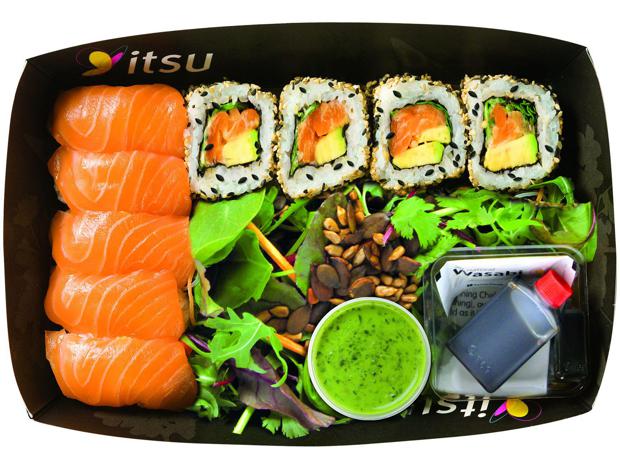
Avo baby rolls clock 346 kcal, salmon sushi 252 kcal for pure fish focus. California rolls add 336 kcal with crab mimicry, sushi festival sets 510 kcal across varieties. Super salmon light at 431 kcal skips heavies, salmon full house 626 kcal packs more. Itsu classics mix at 591 kcal, health and happiness 547 kcal blending avo dragons. The Itsu menu focused on healthy Asian food offers these in collections—veggie at 586 kcal, salmon avo dragons 480 kcal. Precision in rice and wraps keeps it lean.
Noodle Bowls Evolution
Vitality glass noodle bowl at 458 kcal introduces butterfly noodles in miso, gyoza-topped. Chicken gyoza version 468 kcal, chilli amps to 507 kcal for spice. Veggie gyoza 489 kcal mirrors, katsu curry noodles 451 kcal add curry depth. Korean spicy at 495 kcal heats up, Thai noodles 558 kcal coconut-infused. The Itsu menu focused on healthy Asian food refreshes these—steamed, not fried, with greens.
Curry and Teriyaki Hot Boxes
Thai salmon curry 736 kcal leads fuller options, king prawn 623 kcal lighter. Chicken 657 kcal, little versions halve to 335 kcal for veggie balls. Grilled katsu chicken 507 kcal, little at 263 kcal crisps without oil. Double chicken teriyaki 625 kcal doubles up, standard 485 kcal balanced. The Itsu menu focused on healthy Asian food tempers spice with portions—veggie balls teriyaki 521 kcal plants forward.
Soup and Side Anchors
Famous coconut chicken soup 379 kcal comforts, veggie balls version 421 kcal. Chicken noodle 285 kcal simple, detox miso 190 kcal cleanses. Loaded chicken miso 137 kcal proteins up, king prawn 101 kcal. Gyoza—chicken spring onion 251 kcal, veg fusion 234 kcal—pairs easy. The Itsu menu focused on healthy Asian food grounds in these—miso at 32 kcal pure. Crackers hover 97 kcal, seaweed thins 23 kcal snack smart.
Nutrition and Ingredient Edge
Calorie Mapping Across Categories
Poke averages 500 kcal, sushi under 400 kcal often, noodles cluster 450-500 kcal. Curries range wider, 250-700 kcal by size, soups dip below 200 kcal frequently. Sides like edamame 132 kcal, bao buns 255-302 kcal add without dominating. The Itsu menu focused on healthy Asian food maps low overall—many under half typical fast food. That spread suits varied days.
Wholegrains and Fibre Integration
Brown rice in salads, glass noodles light yet filling, quinoa falafels in warrior bowls. Pumpkin seeds dot soups, greens pack every bowl. Seaweed thins deliver fibre crunch at 22-24 kcal. The Itsu menu focused on healthy Asian food weaves these seamlessly—nori crunch 80 kcal boosts. No afterthought; core to steaming.
Protein Sources Variety
Tofu in Thai soups, chicken grilled or teriyaki, prawns king-sized. Salmon poached or sashimi, falafels plant-based. Gyoza fuse veg or meat, almonds protein-plenty at 247 kcal. The Itsu menu focused on healthy Asian food diversifies—13g in salads, 20g-plus in pokes. Balance without excess.
Low Saturated Fat Approach
Steaming skips frying, coconut broths measured. No deep oils in gyoza or katsu—grilled instead. Nutritionists flag salads at 16g fat total, gyoza 4-5g. The Itsu menu focused on healthy Asian food holds fats reasonable—avocado adds healthy ones. Tradition guides.
Vitamin and Mineral Highlights
Seasonal greens in soups, ginger in detox, vitamin C from curries. Probiotics in miso, iron from tofu and seeds. Mango shots 109 kcal fruit-forward. The Itsu menu focused on healthy Asian food layers micronutrients subtly. Density without supplements.
Expansion Amid Wellness Surge
New Site Openings Trajectory
Trafford Centre marks first mall in North, Autumn 2024 push. Brussels debuted Europe, 46 seats plus grab-go. Plans double to 160 UK sites via Savills, temples in cities. The Itsu menu focused on healthy Asian food travels—stadium sushi at Emirates. Momentum builds.
Partnerships Boosting Reach
Delaware North ties deliver to venues, Vitality collab fits health ethos. Woking with Gail’s diversifies centres. No slowdown post-losses; Directional Capital steadies. The Itsu menu focused on healthy Asian food extends via these. Accessibility grows.
Menu Innovations for Growth
Vitality bowl launches lighter noodles, protein teriyaki beds added. Great Taste for bao, A+ audits on production. No radical shifts—refinements like little curries. The Itsu menu focused on healthy Asian food evolves incrementally. Customers adapt easy.
Customer Feedback Patterns
Trustpilot praises freshness, veggie options daily. Hygiene slips rare amid highs. Nutritionists pick gyoza, warrior salads for density. The Itsu menu focused on healthy Asian food wins on taste-health mix. Consistency noted.
Competitive Landscape Positioning
Against Pret roots, Itsu carves Asian niche—sushi over wraps. Expansion eyes cosmopolitan spots, avoiding saturation. The Itsu menu focused on healthy Asian food differentiates via steam and greens. Position holds firm.
The Itsu menu focused on healthy Asian food reveals a model refined over decades, from Metcalfe’s launch to today’s 80-plus sites. Public records show steamed mains averaging 400-500 kcal, fibre from greens and grains standard, proteins varied across animal and plant. Expansion into malls and stadiums extends that without dilution, as recent Vitality bowls affirm. Gaps persist—no full breakdown on every micronutrient shift yearly, nor long-term sourcing audits public. Financial recoveries hint at pressures, yet core lightness endures. Forward, doubling sites tests if wellness appeal scales nationally, or bends under volume. Observers await how poke and gyoza hold in new temples, unresolved as tastes evolve.