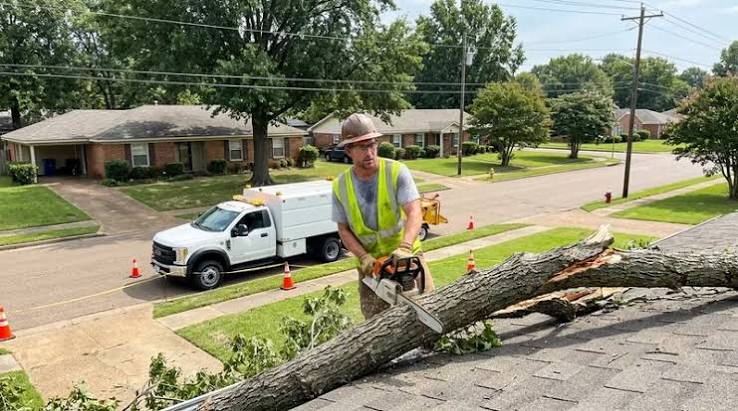
A tree leaning toward a house needs an assessment before anyone offers a cutting plan. For tree removal services in Memphis, I would compare Davey Tree, Robinson Tree Service, Arbor M.D., Red’s Tree Service, and Woodland Tree Service. My starting point is the tree’s condition, nearby structures, and safe equipment access, not a promise that every unwanted tree should come down.
Tree removal services in Memphis: five useful comparisons
1. Davey Tree: removal alongside tree-health assessment
Davey’s Memphis office lists removal, inspections, pruning, storm preparation, and support systems. Its team serves Memphis from Bartlett. This is a relevant option when you need to understand whether removal, selective work, or continued management is appropriate.
Davey also explains that its local operation was formerly Jones Brothers Tree & Landscape Services. Those names should not be counted as independent bids. If subsequent lawn improvements are inspired by Home Enhance Diary, put restoration in a separate scope rather than assuming the tree crew will regrade and reseed.
2. Robinson Tree Service: large trees and limited space
Robinson describes large-tree removal as a focus and also offers trimming and stump grinding. Its neighborhood notes highlight tight Midtown lots and mature trees near overhead lines. That is a contractor’s practical observation worth translating into questions about access and utility coordination.
Ask where equipment will stand and how branches and trunk sections will leave the property. Paths, including permeable surfaces discussed on Home News Hub, may need protection along the access route. Record any agreed surface protection before the crew arrives.
3. Arbor M.D.: owner-led tree care
Arbor M.D. identifies Jeff Cochran as its owner and says he supervises work on site. Its advertised services combine removal, pruning, tree-health care, and emergency work across Memphis and surrounding communities.
I would ask who assesses the tree and who manages the removal itself. Keep those responsibilities distinct from later building repairs. Water-damage restoration, featured on Home Revive Premium, is another trade’s task when a fallen limb has opened a roof; neither contract should leave responsibility for temporary protection unclear.
4. Red’s Tree Service: risk assessment and stump work
Red’s lists tree-risk assessment, removal, stump removal, cabling, bracing, and storm-damage work. That range is useful for comparing the removal recommendation against other measures, particularly when only part of a tree is damaged.
Ask whether stump grinding, debris hauling, and treatment of the remaining hole are included. French-drain ideas on Home Experts Listing address a different yard problem. A removal quote should not quietly become a drainage or root-excavation project without explanation and separate agreement.
5. Woodland Tree Service: broader property recovery
Woodland serves Memphis and the Mid-South with tree work, disaster recovery, plant care, and other outdoor services. Its documented community projects include removing storm-damaged trees from a home and yard. I would compare it when removal forms part of a larger recovery plan.
Separate emergency stabilization from complete cleanup and future planting. Rain-garden topics featured on Elite Home Paper belong to a later restoration discussion, not the immediate decision about a hazardous tree. Establish which debris and damaged surfaces the crew will leave behind.
Before accepting a removal quote, identify the exact tree on a marked photograph or site sketch. Explain where vehicles park, which gates can be opened, and whether equipment must cross a neighboring property. Ask who obtains any needed access permission. If wood is staying for firewood, agree the lengths and stacking location; leaving logs and removing all timber are different finished jobs.
Power lines change the first call
MLGW warns customers never to trim limbs near or touching power lines and directs them to contact the utility. Do not climb, cut, or move affected branches yourself. Electrical clearance must be resolved before ordinary private tree work proceeds.
Make estimates describe the same finished job
Request written details covering the identified tree, access, removal method, stump work, hauling, and restoration exclusions. Confirm current insurance and any required permissions. A low number for cutting alone is not comparable with a proposal that includes cleanup.
I would choose the company that explains the recommendation, keeps people outside the work area, and makes the property’s condition after departure clear before work begins.
Hazardous trees and trees near electrical lines require appropriately trained professionals and utility coordination; keep clear of unstable trees and energized equipment.